
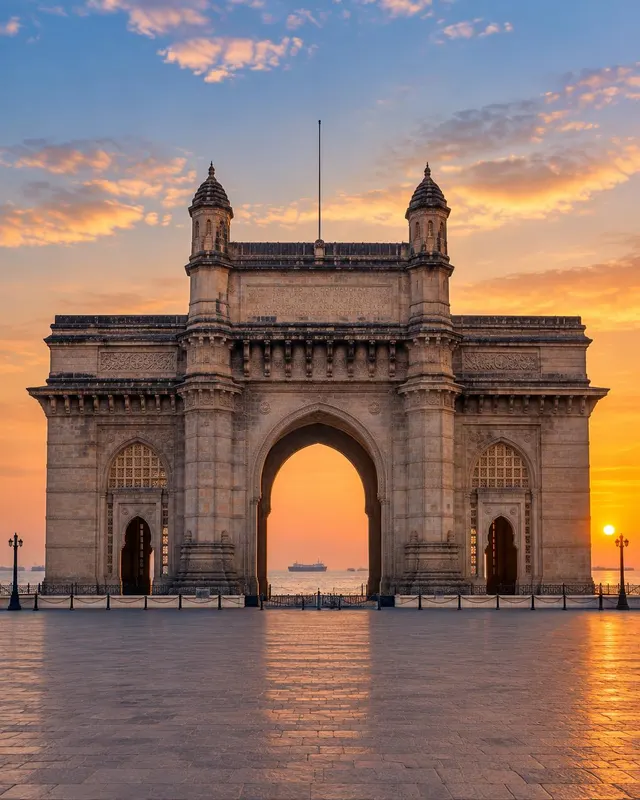
Gateway of India, Mumbai — a visitor's guide
Waterfront arch overlooking Mumbai Harbour
The Gateway of India stands at Apollo Bunder in South Mumbai, where Colaba’s streets meet the harbour. Its yellow basalt arch is familiar from photographs, but the setting gives it much of its appeal: boats moving across the water, ferries alongside the landing steps and the Taj Mahal Palace hotel across the road. For someone looking up the Gateway of India, Mumbai, the useful distinction is that this is an outdoor waterfront stop, not an enclosed monument with rooms to explore.
British authorities commissioned the arch to commemorate the arrival of King George V and Queen Mary in 1911. Completed in 1924, it was the work of architect George Wittet, who combined the form of a triumphal arch with details drawn from sixteenth-century Gujarati architecture. Look up at the lattice stonework and the central dome, which reaches about 26 metres. The waterfront also witnessed the departure of the last British troops after independence.
What it feels like by the water
The plaza is a busy public space rather than a quiet lookout. Families gather for photographs, visitors pause along the waterfront and ferry passengers make their way towards the boarding points. You can appreciate the monument without spending long here, though watching the boats and looking at the Taj’s façade can easily extend the stop.
The immediate surroundings change quickly as you walk inland. Apollo Bunder feels open and exposed to the weather; the streets behind the Taj are tighter, with hotels, cafés and shops occupying older buildings. Colaba Causeway brings denser foot traffic and pavement shopping. Distances can look short on a map, but crowded pavements and road crossings slow things down.
Among the places to visit near Gateway of India, the Chhatrapati Shivaji Maharaj Vastu Sangrahalaya and the galleries around Kala Ghoda make sensible additions. Colaba Causeway fits easily into the same outing. Marine Drive is better treated as a separate stop reached by taxi rather than a quick extension of the waterfront walk, particularly in humid weather.
Getting there and choosing your time
Churchgate and Chhatrapati Shivaji Maharaj Terminus, usually called CSMT, are the main suburban rail gateways for this part of Mumbai. Neither station is beside the monument. A taxi for the final stretch is convenient, especially with luggage or children. Walking is possible if you want to see more of the Fort area, but it adds a substantial stretch on exposed streets.
BEST buses serve Colaba, though the best route depends on your starting point. Check a current journey planner for the nearest suitable stop. Black-and-yellow taxis and app-based cabs are useful locally; auto-rickshaws do not operate in this part of South Mumbai. Traffic controls near the waterfront can affect where a driver drops you, so expect a short walk rather than arrival directly at the arch.
Coming from the airport or the northern suburbs, leave room for traffic delays. Driving yourself is generally less convenient because parking near Apollo Bunder is constrained. During busy periods, a pickup point a little away from the plaza may be easier to agree with your driver.
November to February usually brings the most comfortable conditions. Early morning suits a quieter look at the stonework and harbour, while late afternoon avoids the strongest midday heat. The Gateway faces the harbour rather than the sunset, so do not expect to see the sun drop into the sea directly beyond the arch.
Summer can feel draining even with a breeze. During the monsoon, rain and slippery surfaces make a waterfront visit less predictable, and rough weather can disrupt ferry services. Boats for Elephanta Island make this a departure point as well as a sightseeing stop, but that excursion needs its own time allowance and a check on current sailings. Access to the plaza generally involves security screening; carry a manageable bag and follow instructions at the entrance.
Eating nearby and deciding where to stay
Restaurants near Gateway of India are concentrated in the lanes of Colaba and along the Causeway. The choice includes cafés, straightforward Indian meals and more expensive hotel dining. Moving a few streets back from the waterfront gives you more options than staying immediately beside the monument.
Leopold Cafe and Cafe Mondegar are longstanding Colaba names, both associated with the neighbourhood’s busy café scene. They can be noisy and crowded, so they suit a lively break better than a quiet rest. For a less hurried meal, check the menu and seating before settling in. Seafood and Parsi dishes are worth seeking out in South Mumbai, but neither is available at every nearby restaurant.
Carry drinking water, especially if you are combining the Gateway with shopping or a museum visit. Sealed bottles are readily available in neighbourhood shops. At street-food stalls, look for food cooked fresh and served hot; avoid leaving a long outdoor walk until after a heavy lunch.
Visitors comparing hotels near Gateway of India usually start with Colaba for the convenience of walking to the waterfront. The Taj Mahal Palace is the landmark choice directly opposite, while the surrounding streets have smaller hotels and guesthouses. Room size, lift access and street noise deserve attention in older buildings.
Fort and Churchgate also work well for a South Mumbai stay, particularly if rail access matters. If most of your plans are in Bandra or the northern suburbs, staying beside the Gateway can mean repeated long journeys. Choose your base around the rest of the trip, not just this one stop.
Shopping and everyday essentials in Colaba
Colaba Causeway is the nearby shopping draw, with pavement stalls selling jewellery, bags, clothing and souvenirs alongside established shops. Bargaining is common at informal stalls; fixed-price stores work differently. Check fastenings, stitching and sizes before paying, since exchanging a purchase may be awkward once you leave the area.
For daily needs, look along the inland commercial streets for convenience shops and small grocers selling water, snacks and toiletries. These are more useful for practical purchases than the open waterfront plaza.
Pharmacies and medical shops are found around Colaba’s shopping streets rather than at the monument itself. Check current opening hours if you need something late in the day, and carry your prescription for regular medicines. For anyone sensitive to heat, buying water before entering the plaza is easier than interrupting the visit to find a shop. Comfortable shoes with grip are particularly useful around wet paving and the ferry approaches.